
By Sydney Waga Seoke
It is marula season in Limpopo and parts of Mpumalanga — from the villages of Bushbuckridge to the streets of Phalaborwa — a time when the sweet scent of ripe marula fruit signals celebration, tradition and economic activity. But this year, nature has rewritten the script.
The annual Marula Festival, traditionally hosted in Phalaborwa, has been postponed following severe flood damage that affected key access routes into the town and surrounding areas in the greater Kruger region. According to a statement issued through Limpopo Tourism Agency, the decision was taken after major routes leading to Phalaborwa were impacted by adverse weather conditions, prioritising public safety and infrastructure recovery.
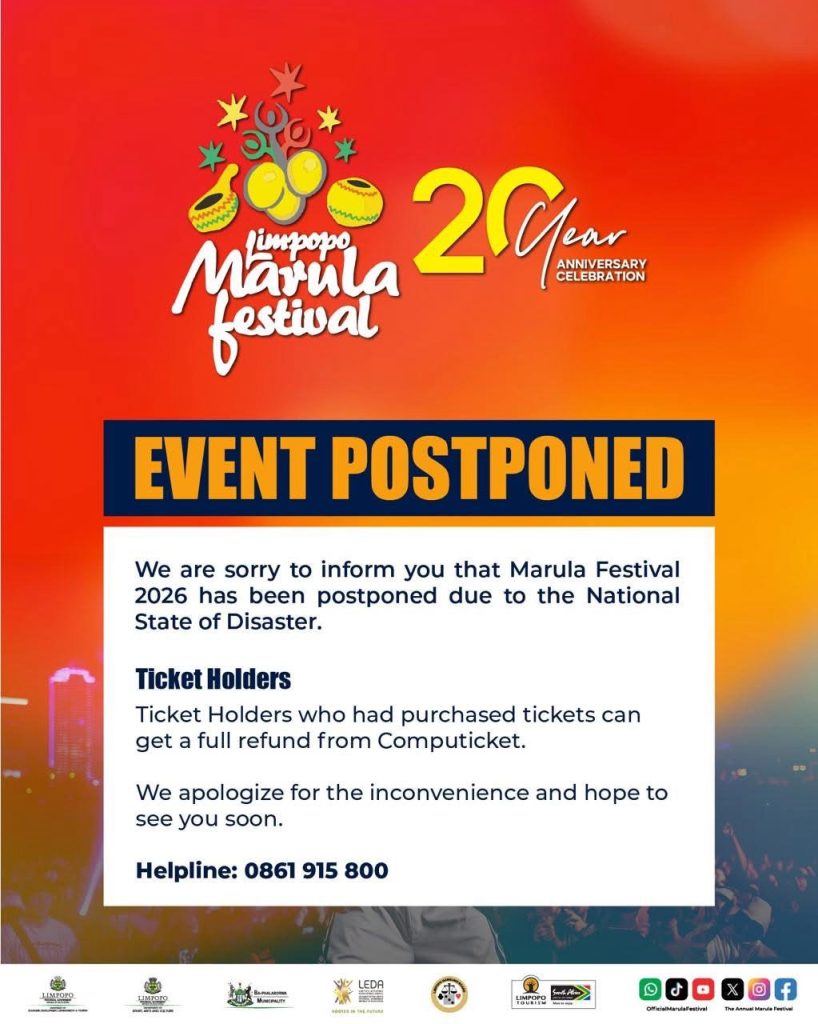
Official announcement of the Annual Marula festival by the organizers due to the National State of Disater.
The Marula Festival is more than a calendar event. It is a cultural and economic heartbeat for communities around Phalaborwa, drawing visitors from across the province and neighbouring Mpumalanga. It supports informal traders, accommodation establishments, transport operators and cultural performers who rely on seasonal tourism income.
Yet beyond the postponement lies a deeper frustration voiced by residents — particularly in Namakgale and other townships under the Ba-Phalaborwa Local Municipality.
While the floods have undeniably caused widespread damage, many locals argue that service delivery challenges predate the disaster. Concerns over deteriorating roads, drainage systems, refuse removal and general infrastructure maintenance have been ongoing. For residents, the floods did not create the problem — they exposed and amplified it.
Images circulating on municipal platforms show leadership conducting site visits and assessments. Public communication has emphasised cooperation, recovery and vigilance. However, on the ground, residents question whether long-term planning and preventative maintenance could have reduced the scale of disruption.

In Namakgale, community members have repeatedly raised concerns about neglected infrastructure. During heavy rains, blocked stormwater systems and poorly maintained roads quickly become hazardous. The postponement of the festival, while understandable from a safety perspective, has intensified conversations about governance and accountability.
The Marula Festival symbolises abundance — a fruit that thrives in harsh climates, deeply rooted in local tradition among communities across Bushbuckridge and Phalaborwa. Ironically, this season of cultural pride now intersects with a season of reflection.
For Beyond Kruger Magazine, this moment is not only about a postponed celebration. It is about the resilience of communities in the greater Kruger region, the importance of sustainable infrastructure, and the responsibility of local government to match cultural ambition with service delivery.
As Limpopo rebuilds, residents hope the recovery effort will not be temporary, but transformative — ensuring that when the marula fruit ripens next season, the roads, drainage systems and township infrastructure will be equally ready to welcome visitors.
Because in this region, tourism is not separate from community wellbeing. It depends on it.