
Every winter, thousands of people descend on Innibos National Arts Festival in Mbombela. The festival grounds fill with music, food stalls, art, theatre and laughter. This year again, from 2–5 July at Bergvlam High School, organisers promise a celebration of “everything that’s IN.”
But there is a question quietly hanging in the Lowveld air.
Who exactly is “IN”?
The line-up reads like a who’s who of Afrikaans music: Die Heuwels Fantasties, Elvis Blue, Karlien van Jaarsveld, Ricus Nel, Van Pletzen, Bobby van Jaarsveld, Fokofpolisiekar, Juanita du Plessis, Francois van Coke, and many more.
It is impressive. It is organised. It is proudly Afrikaans.
And that is exactly where my curiosity begins.
Because Mbombela is not just Afrikaans.
Mbombela is Xitsonga, Sepedi, siSwati, isiZulu, English and Afrikaans all at once. It is taxis hooting, street vendors shouting prices, amapiano from passing cars and rugby highlights playing in sports bars.
Yet when you visit the Innibos website, everything is in Afrikaans.
Of course, you can click the translate button. But still, the question lingers:
How many black people in Mbombela know about this festival?
And an even more uncomfortable one:
How many have ever attended it?
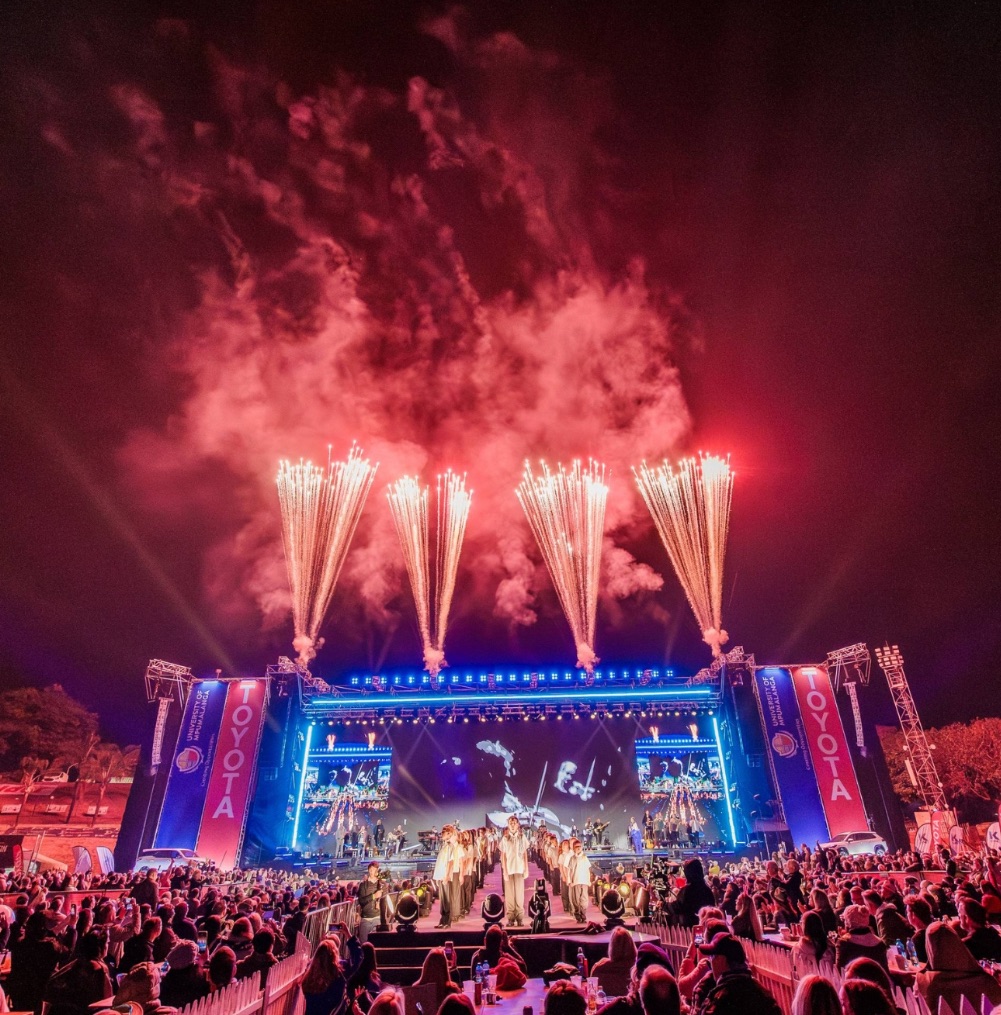
Lights, music and atmosphere set the tone for an unforgettable evening at the Innibos National Arts Festival in Mbombela — one of the Lowveld’s biggest cultural gatherings.
Walking Into Someone Else’s Cultural Living Room
Imagine a black festivalgoer walking into Innibos for the first time.
The music is unfamiliar.
The language around you flows in Afrikaans.
The jokes on stage land differently.
You look around.
You might be one of the few black faces in the crowd.
Do you feel like a guest?
Or do you feel like you belong?
Do you sing along to the lyrics of Spoegwolf or Appel even if you don’t fully understand them?
Do strangers welcome you into their circle of friends and beer cups?
Or do people quietly wonder what you are doing there?
These are not accusations. They are honest questions about belonging.
Because festivals are not just about music.
They are about who feels comfortable enough to attend.
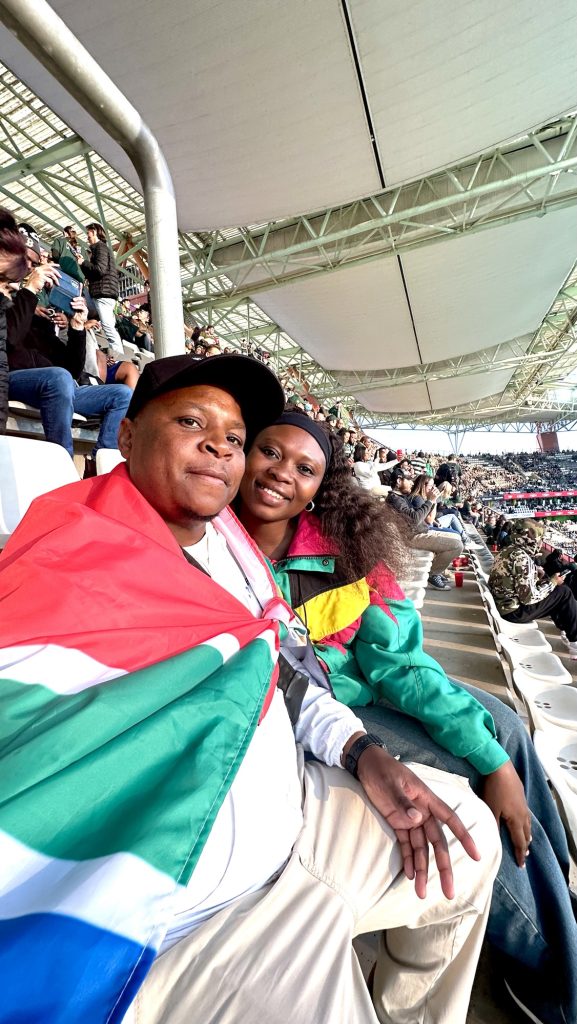
A shared moment: The author and his partner soaking in the vibrant match-day atmosphere at Mbombela Stadium in Mbombela during a Springbok game.
A Lesson From Rugby
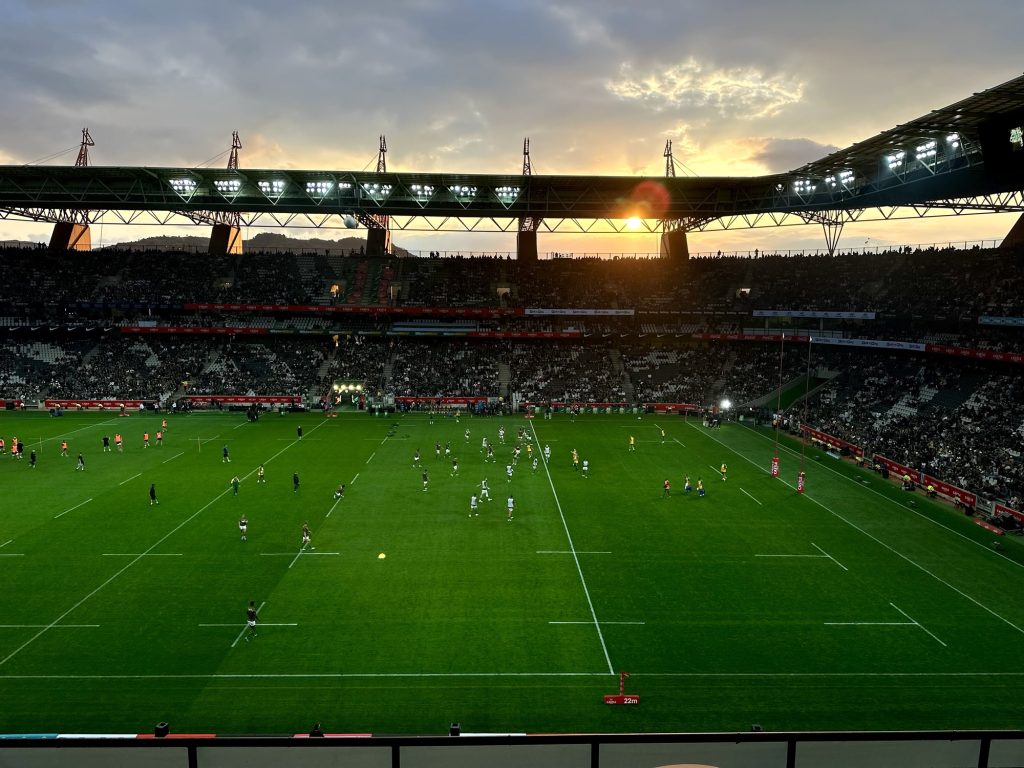
I remember attending a Springbok game in Mbombela at Mbombela Stadium.
The atmosphere was electric.
Black, white, young, old — everyone wearing green and gold. Strangers high-fiving. Beer spilling. Flags waving.
Sport did something powerful.
It made us feel like we were part of the same story.
Campaigns like #BokkeFriday turned patriotism into a shared ritual. Offices filled with Springbok jerseys every Friday during the World Cup.
Recently, Gayton McKenzie from the Department of Sport, Arts and Culture (South Africa) made a call that sparked conversation: he wants white South Africans to rally behind Bafana Bafana the same way the country rallies behind the South Africa national rugby union team.
The idea is simple.
Support should go both ways.
Cultural Economies Are Powerful
To be clear: Innibos is not the villain here.
Far from it.
The festival contributes enormously to tourism in Mbombela. Hotels fill up. Restaurants thrive. Vendors sell crafts and food. Local businesses benefit.
That kind of cultural economy deserves recognition.
Afrikaans communities supporting their artists, their language and their culture is something South Africa should respect.
But here’s the bigger question:
What would Innibos look like if Mbombela truly belonged to everyone who lives in it?
The Curiosity I Can’t Shake
I genuinely want to know something.
Is there a black person reading this who has attended Innibos?
Did you enjoy the music?
Did you feel welcomed?
Did you feel free to be yourself?
Or did you feel like you had accidentally walked into someone else’s family reunion?
Because belonging is not about invitations.
It is about comfort.
And maybe, just maybe, Mbombela is ready for a conversation about what cultural belonging really looks like.
Not just at Innibos.
But everywhere.